
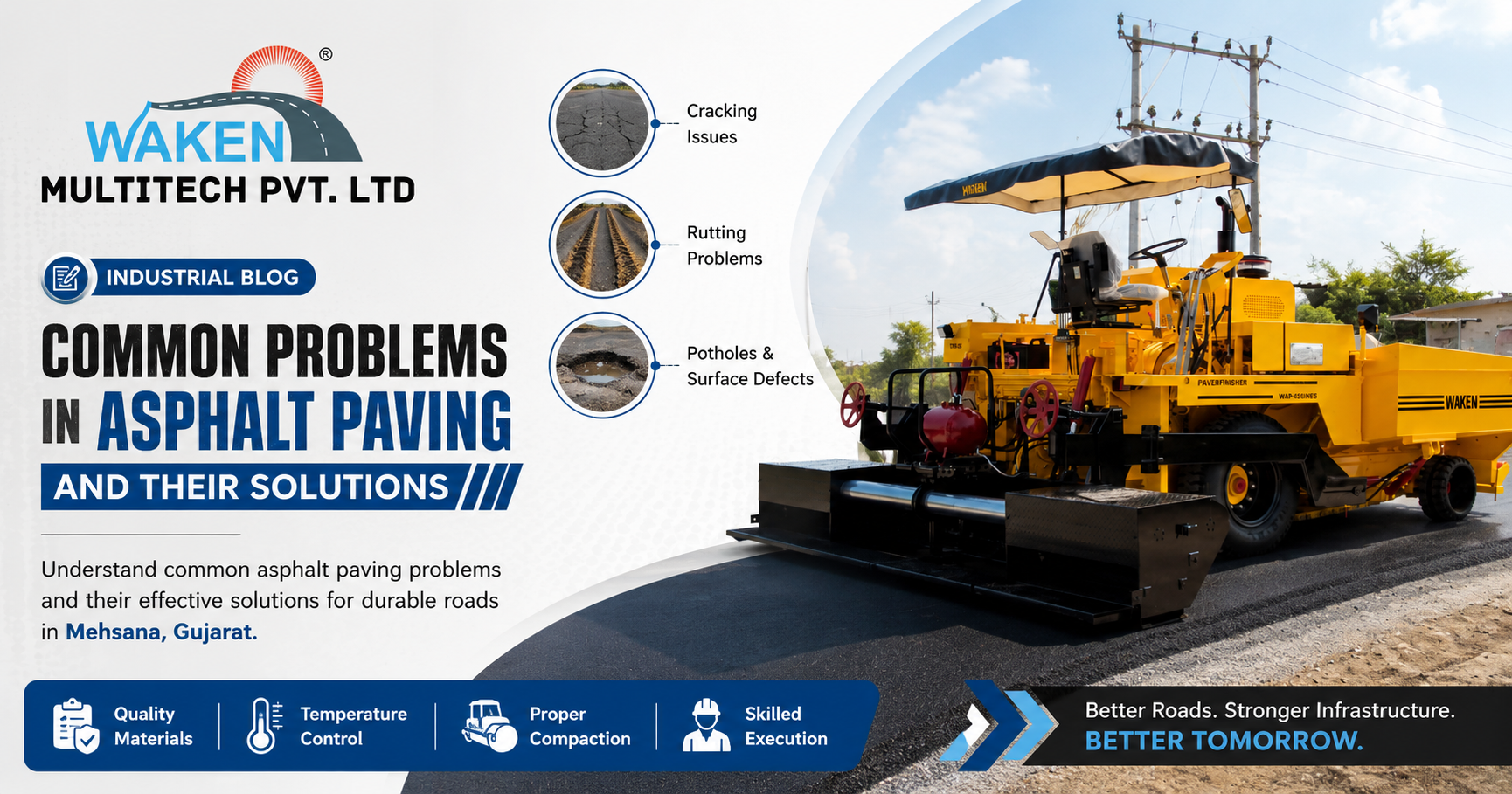
Common Problems in Asphalt Paving and Their Solutions
Understand common asphalt paving problems and their effective solutions for durable roads in Mehsana, Gujarat. Learn how to ensure quality infrastructure.
Why This Matters in Mehsana, Gujarat
Mehsana, situated in the heart of Gujarat, is a rapidly developing region with significant industrial, agricultural, and commercial activity. The sustained growth here demands a resilient and well-maintained road infrastructure to facilitate transport and logistics. Poorly constructed or maintained asphalt roads can lead to increased vehicle wear, traffic delays, and higher long-term repair costs for local authorities and businesses. Therefore, identifying and resolving common asphalt paving problems directly contributes to the economic vitality and operational efficiency of Mehsana and its surrounding areas.
What Is Asphalt Paving — Overview
Asphalt paving involves laying a mixture of asphalt binder and aggregate materials to create a smooth, durable surface for roads, highways, and other paved areas. This process typically includes preparing the subgrade, applying a tack coat, laying the asphalt mix with a paver finisher, and compacting it to achieve the desired density and smoothness. The quality of each step, from material selection to final compaction, significantly influences the pavement's structural integrity and resistance to wear. Asphalt's flexibility and relatively quick curing time make it a preferred choice for many road construction projects.
Key Challenges in Asphalt Paving Projects
Achieving a high-quality asphalt pavement involves navigating several critical challenges that can impact the final product. These issues often stem from a combination of material properties, environmental conditions, and operational practices. Addressing these challenges proactively is essential for successful project outcomes.
Material Quality Control: Ensuring the aggregate and asphalt binder meet specified standards for gradation, purity, and performance.
Temperature Management: Maintaining the optimal temperature of the asphalt mix during transport, laying, and compaction to ensure proper workability and bonding.
Compaction Uniformity: Achieving consistent density across the entire paved surface to prevent premature rutting and cracking.
Environmental Conditions: Managing the impact of ambient temperature, humidity, and precipitation on the paving process and material curing.
Equipment Calibration and Maintenance: Ensuring paver finishers and rollers are properly calibrated and maintained for precise operation and consistent results.
Subgrade Preparation: Establishing a stable, well-drained, and uniformly compacted subgrade to support the asphalt layers effectively.
Skilled Workforce: Having experienced operators and supervisors who understand paving techniques and quality control measures.
Common Asphalt Paving Problems and Their Causes
Various defects can appear in asphalt pavements, each with distinct causes that often relate to design, materials, construction practices, or environmental factors. Recognizing these problems early helps in implementing targeted solutions.
Cracking (Fatigue, Thermal, Block): Fatigue cracking (alligator cracking) results from repeated traffic loading, indicating structural failure. Thermal cracking occurs due to temperature fluctuations causing expansion and contraction. Block cracking forms interconnected rectangular patterns, often linked to asphalt aging or poor binder quality.
Rutting and Shoving: Rutting manifests as longitudinal depressions in the wheel paths, caused by insufficient mix stability, inadequate compaction, or excessive traffic loads. Shoving is a localized bulging or displacement of the pavement, typically due to poor bond between layers or unstable mix.
Potholes: These are bowl-shaped depressions that penetrate through the asphalt layer, often forming after water infiltrates cracks, freezes, expands, and then combines with traffic loads to dislodge pavement material.
Bleeding (Flushing): This occurs when excess asphalt binder rises to the surface, creating a shiny, black, and often sticky film. It reduces skid resistance and is usually caused by too much asphalt in the mix, low air voids, or excessive tack coat.
Raveling: The dislodgement of aggregate particles from the asphalt surface, leaving a rough and open texture. Common causes include insufficient asphalt binder, poor compaction, or aging of the binder.
Stripping: The loss of adhesion between the asphalt binder and the aggregate particles, often initiated by water infiltration. This weakens the pavement structure and can lead to other forms of distress.
Segregation: Uneven distribution of aggregate sizes within the asphalt mix, leading to areas with different textures and densities. This can result in localized weak spots prone to cracking and raveling.
Effective Solutions for Asphalt Paving Issues
Addressing asphalt paving problems requires a systematic approach, focusing on prevention through proper planning and execution, as well as effective repair strategies. The right solutions depend on the specific type and severity of the defect.
Optimized Mix Design: Ensure the asphalt mix has the correct aggregate gradation, binder content, and additives for the specific traffic and environmental conditions.
Precise Temperature Control: Monitor and maintain the asphalt mix temperature during mixing, transport, and paving to ensure proper workability and compaction.
Thorough Compaction: Utilize appropriate rollers and compaction patterns to achieve uniform density, minimizing voids and increasing pavement strength.
Effective Drainage Systems: Design and install proper drainage to prevent water accumulation beneath and within the pavement structure, mitigating water-related damage.
Quality Subgrade Preparation: Ensure the subgrade is adequately prepared, stable, and uniformly compacted to provide a strong foundation for the asphalt layers.
Regular Equipment Maintenance: Calibrate and maintain paver finishers, rollers, and other equipment to ensure precise operation and consistent material application.
Timely Crack Sealing: Seal cracks promptly to prevent water infiltration, which can lead to more severe damage like potholes and stripping.
Surface Treatments: Apply surface treatments like chip seals or slurry seals to address minor surface defects, improve skid resistance, and extend pavement life.
Full-Depth Repair: For severe localized damage like large potholes or extensive rutting, perform full-depth repairs by removing and replacing the affected pavement section.
Quality Standards and Compliance
Adherence to established quality standards and compliance protocols is fundamental for constructing durable asphalt pavements. These standards ensure that materials, processes, and finished products meet specific performance criteria. Buyers should verify that suppliers and contractors comply with relevant Indian Standards (IS), such as IS 73 for paving bitumen, IS 2386 for aggregate properties, and IS 2720 for soil testing.
Additionally, ISO certifications for quality management systems (ISO 9001) indicate a commitment to consistent quality. Verifying these certifications and understanding the quality control procedures implemented by a supplier, including material testing, mix design verification, and compaction checks, is crucial. This due diligence helps ensure the longevity and reliability of the paved infrastructure.
Why Waken Multitech's Experience and Capability Matters
The successful resolution of asphalt paving problems often hinges on the quality of equipment used and the expertise behind its operation. Waken Multitech Pvt. Ltd., with over 15 years of technical expertise in road construction equipment, understands these challenges deeply. Our manufacturing facility on the Mehsana–Vijapur Highway is equipped to produce robust and high-performance paver finishers, essential for achieving precise and uniform asphalt paving.
Our technical capability allows for the fabrication of machines designed for durability and efficiency, directly contributing to preventing common paving defects. The team's experience ensures that our equipment, like the Hydrostatic Sensor Paver Finisher, incorporates features for accurate thickness control and superior surface finish, which are critical for avoiding issues like rutting or segregation. We focus on reliable delivery and responsive after-sales support, ensuring that our clients have the necessary tools and assistance to maintain high-quality road construction standards.
Installation, Maintenance and Care Tips
Proper installation and ongoing maintenance are vital for maximizing the lifespan and performance of asphalt pavements, mitigating many common problems. These practices help preserve the structural integrity and surface quality of the road.
- Pre-Paving Inspection: Before laying asphalt, thoroughly inspect the subgrade and base layers for proper compaction, drainage, and uniformity. Address any deficiencies to prevent future settlement or cracking.
- Paver Finisher Setup: Ensure the paver finisher is correctly calibrated for the desired mat thickness and width. The screed should be properly heated and leveled to achieve a smooth, consistent surface.
- Compaction Sequence: Establish a systematic compaction pattern using appropriate rollers (breakdown, intermediate, and finish) to achieve target density uniformly across the pavement. Avoid over-compaction or insufficient compaction.
- Joint Construction: Pay close attention to longitudinal and transverse joints, ensuring they are well-compacted and properly sealed to prevent water infiltration and premature deterioration.
- Regular Cleaning: Keep the pavement surface clean from debris, dirt, and vegetation, which can trap moisture and accelerate deterioration.
- Prompt Crack Sealing: Inspect the pavement regularly for cracks and seal them immediately with appropriate crack sealants. This prevents water from penetrating the base layers.
- Drainage Maintenance: Ensure all drainage systems, including shoulders and culverts, are clear and functioning correctly to divert water away from the pavement structure.
- Patching Potholes: Repair potholes as soon as they appear using suitable patching materials and techniques to prevent them from expanding and causing further damage.
Frequently Asked Questions
Alligator cracking, also known as fatigue cracking, is primarily caused by repeated traffic loading that exceeds the pavement's structural capacity. It indicates a failure in the underlying base or subgrade, or insufficient pavement thickness for the applied loads. Water infiltration into existing cracks can accelerate this deterioration, leading to a network of interconnected cracks resembling alligator skin.
Preventing rutting involves several key steps, including using an asphalt mix design with adequate stability and resistance to deformation, ensuring proper compaction during construction to achieve specified density, and selecting aggregates with good interlocking properties. Additionally, designing the pavement structure to accommodate anticipated traffic loads and temperatures is crucial.
Temperature plays a critical role in asphalt paving quality. The asphalt mix must be laid and compacted within a specific temperature range to ensure proper workability, aggregate coating, and bonding. If the mix is too cold, it becomes stiff, making compaction difficult and leading to high air voids. If too hot, the binder can drain, causing segregation and bleeding.
Proper drainage is essential because water is a primary contributor to pavement deterioration. Water infiltration weakens the subgrade and base layers, reduces the strength of the asphalt mix, and can lead to stripping, potholes, and freeze-thaw damage. Effective drainage systems divert water away from the pavement structure, preserving its integrity.
Asphalt pavements should be inspected regularly, ideally at least once a year, and more frequently in areas with heavy traffic or severe weather conditions. Early detection of minor defects like hairline cracks or small potholes allows for timely intervention, preventing them from escalating into more significant and costly repairs.
Asphalt stripping is indicated by the loss of adhesion between the asphalt binder and the aggregate, often visible as a dull, rough surface where aggregates are exposed. It can be caused by moisture, poor aggregate quality, or inadequate binder. Addressing it involves using anti-stripping additives in the mix, ensuring proper drainage, and sometimes requiring full-depth pavement removal and replacement.
Conclusion
Addressing common problems in asphalt paving is fundamental to constructing and maintaining resilient road infrastructure, particularly in growing regions like Mehsana, Gujarat. From understanding the causes of cracking and rutting to implementing effective solutions through optimized mix designs, precise temperature control, and thorough compaction, every step contributes to pavement longevity. Partnering with experienced equipment manufacturers like Waken Multitech Pvt. Ltd., who provide reliable and high-performance paver finishers, further ensures that road construction projects achieve the desired quality and durability. A proactive approach to quality control and maintenance ultimately delivers safer, more efficient, and sustainable road networks.
Get In Touch
Waken Multitech Pvt. Ltd.