
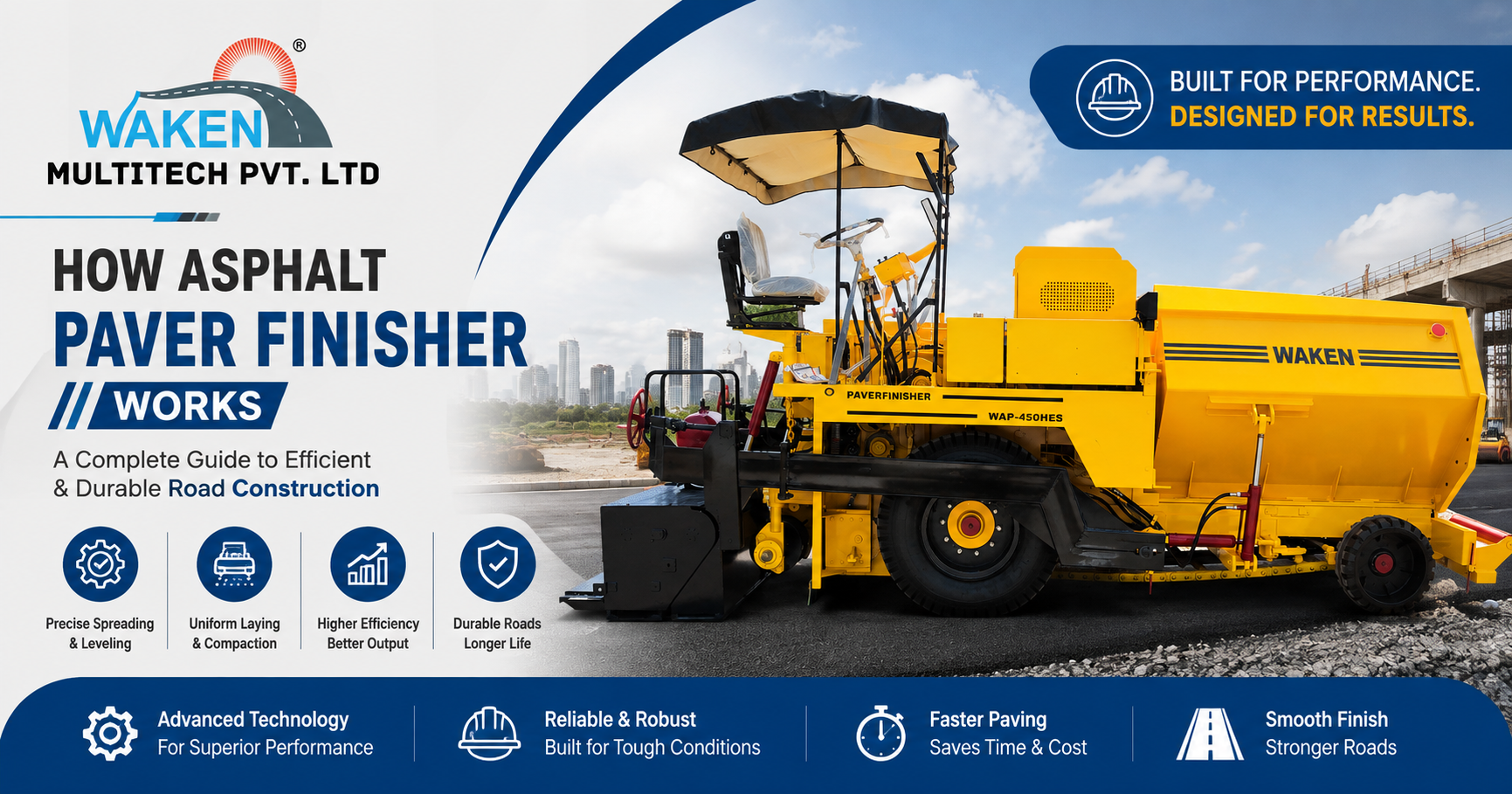
How Asphalt Paver Finisher Works
Understand the intricate workings of an asphalt paver finisher. Learn how these machines ensure precise, efficient, and durable road construction with Waken Mul
Why This Matters in Gujarat
Gujarat's rapidly expanding infrastructure demands efficient and high-quality road construction. As the state continues to grow, so does the need for robust road networks connecting its industrial hubs, agricultural centers, and urban areas. The effective functioning of asphalt paver finishers directly impacts project timelines, material efficiency, and the long-term durability of these vital transportation arteries. Ensuring that these machines operate optimally is crucial for meeting the state's ambitious development goals and maintaining the integrity of its growing road infrastructure.
What is an Asphalt Paver Finisher — Overview
An asphalt paver finisher is a sophisticated piece of construction equipment designed to lay asphalt concrete for road surfaces. It receives hot mix asphalt from dump trucks, spreads it evenly across the prepared roadbed, and provides an initial compaction. The machine typically consists of a tractor unit that provides propulsion and power, and a screed unit at the rear that performs the spreading and leveling. Its primary function is to create a consistent mat of asphalt with controlled thickness and width, ready for subsequent compaction by rollers.
Key Features and Technical Specifications
- Hopper: Receives and stores the hot mix asphalt from delivery trucks.
- Conveyor System: Transports asphalt from the hopper to the rear of the machine.
- Augers: Distribute the asphalt evenly across the width of the screed.
- Screed: The heart of the paver, responsible for leveling, smoothing, and initial compaction. It features adjustable heating elements and tamping bars.
- Tamping Bar: Vibrates to pre-compact the asphalt mat.
- Vibrators: Assist in achieving density and a smooth finish.
- Control Panel: Allows operators to manage speed, screed settings, and other operational parameters.
- Towing Mechanism: Connects the tractor unit to the screed, allowing for adjustments in paving width and depth.
Industrial Applications and Use Cases
- Highway Construction and Repair: Laying new asphalt layers on national and state highways.
- Urban Road Paving: Constructing and resurfacing roads in cities and towns.
- Airport Runways and Taxiways: Ensuring smooth and durable surfaces for aviation.
- Industrial Estate Roads: Building access roads and internal networks within industrial zones.
- Residential Development: Paving roads within new housing projects.
- Parking Lot Construction: Creating smooth and even surfaces for commercial and private parking areas.
- Bridge Deck Paving: Applying asphalt layers on bridge structures.
- Rural Road Improvement: Upgrading and maintaining rural transportation routes.
How to Choose the Right Asphalt Paver Finisher
Selecting the appropriate asphalt paver finisher is critical for project success. Consider these factors:
- Paving Width and Depth: Ensure the machine can achieve the required width and thickness for your project specifications.
- Material Handling Capacity: The hopper size and conveyor system should match the volume of asphalt needed for efficient operation.
- Mobility and Maneuverability: Consider the job site conditions; some pavers are more agile than others.
- Technology and Control Systems: Decide between basic mechanical controls, semi-sensor, or advanced hydrostatic sensor systems for precision.
- Power and Engine Performance: The engine should provide sufficient power for various site conditions and material types.
- Screed Type and Features: Look for features like heating, tamping bars, and vibration for optimal mat quality.
- Brand Reputation and Support: Choose a manufacturer with a proven track record and reliable after-sales service.
- Compliance and Certifications: Verify that the equipment meets relevant industry standards.
Quality Standards and Compliance
For any road construction equipment, adherence to quality standards is paramount. In India, the Bureau of Indian Standards (BIS) often sets specifications for construction machinery, though specific standards for paver finishers might align with international norms like ISO. Manufacturers like Waken Multitech Pvt. Ltd. focus on building machines that meet stringent internal quality control measures, ensuring durability and performance. Buyers should inquire about the materials used, manufacturing processes, and any certifications the equipment holds to guarantee it meets the demands of modern infrastructure projects and regulatory requirements.
Why Waken Multitech's Experience and Capability Matters
With over 15 years of hands-on experience in the road construction equipment sector, Waken Multitech Pvt. Ltd. brings a deep understanding of the industry's needs. Our manufacturing facility, strategically located on the Mehsana–Vijapur Highway, is equipped to produce high-performance asphalt paver finishers. We leverage advanced manufacturing techniques and a skilled technical team, drawing on expertise gained from associations with established groups like Apollo. This allows us to engineer machines that are not only durable and efficient but also incorporate innovative features for precise paving.
Our commitment extends beyond manufacturing; we offer customized solutions tailored to specific project requirements and provide dedicated after-sales support. This holistic approach ensures that our clients receive reliable equipment and ongoing assistance, contributing to the successful completion of their road construction projects.
Installation, Maintenance, and Care Tips
Proper installation and regular maintenance are key to the longevity and optimal performance of an asphalt paver finisher.
- Installation: Ensure the paver is set up on a level surface and all hydraulic and electrical connections are secure. Familiarize the operating crew with all controls and safety features before commencing work.
- Daily Checks: Before each shift, inspect the hopper, conveyors, augers, and screed for any debris or damage. Check fluid levels (hydraulic oil, engine oil, coolant) and tire pressure.
- Screed Maintenance: Keep the screed clean, especially after use. Hot asphalt residue can harden and affect its leveling capabilities. Use recommended cleaning agents and ensure heating elements are functioning correctly.
- Lubrication: Follow the manufacturer's lubrication schedule for all moving parts, including bearings, chains, and pivot points.
- Filter Replacement: Regularly check and replace air, fuel, and hydraulic filters to maintain engine and system efficiency.
- Storage: When not in use for extended periods, clean the machine thoroughly, protect it from the elements, and ensure all moving parts are lubricated.
Frequently Asked Questions
The primary function of an asphalt paver finisher is to accurately and uniformly lay hot mix asphalt onto a prepared roadbed. It receives the asphalt from trucks, spreads it to a specified width and thickness, and provides initial compaction, creating a smooth mat ready for further compaction by rollers.
The screed unit is equipped with tamping bars and vibrators. The tamping bars pre-compact the asphalt, while the vibrators help achieve density and a smooth finish. The screed's angle and height can be adjusted to control the mat's thickness and ensure a level surface.
A mechanical paver finisher relies on manual adjustments and operator skill for consistent paving. A sensor-controlled paver finisher uses electronic sensors that can reference existing surfaces, string lines, or laser signals to automatically adjust the screed, ensuring greater accuracy and uniformity, especially on complex terrains or for specific project requirements.
Asphalt is typically delivered to the paver finisher by dump trucks. The trucks back up to the paver's hopper, where the hot mix asphalt is discharged. The paver's conveyor system then moves the asphalt from the hopper to the rear screed unit for spreading.
The augers, located at the rear of the paver, are responsible for distributing the asphalt evenly across the entire width of the screed. This ensures that the asphalt is spread uniformly, preventing any low spots or ridges and contributing to a consistent mat thickness.
Yes, most asphalt paver finishers are designed to handle various types of asphalt mixes, including standard asphalt concrete, stone mastic asphalt (SMA), and wet mix applications, provided the machine's specifications and settings are adjusted accordingly.
Conclusion
Understanding how an asphalt paver finisher works is fundamental to appreciating the precision and engineering involved in modern road construction. From receiving and distributing hot mix asphalt to laying a uniform and smooth mat, each component plays a crucial role. Choosing the right machine, based on project needs and manufacturer expertise, ensures efficiency, durability, and a high-quality final road surface. Waken Multitech Pvt. Ltd. is dedicated to providing robust, high-performance asphalt paver finishers that meet these critical demands, backed by years of industry experience and a commitment to quality engineering.
Get In Touch
Waken Multitech Pvt. Ltd.