
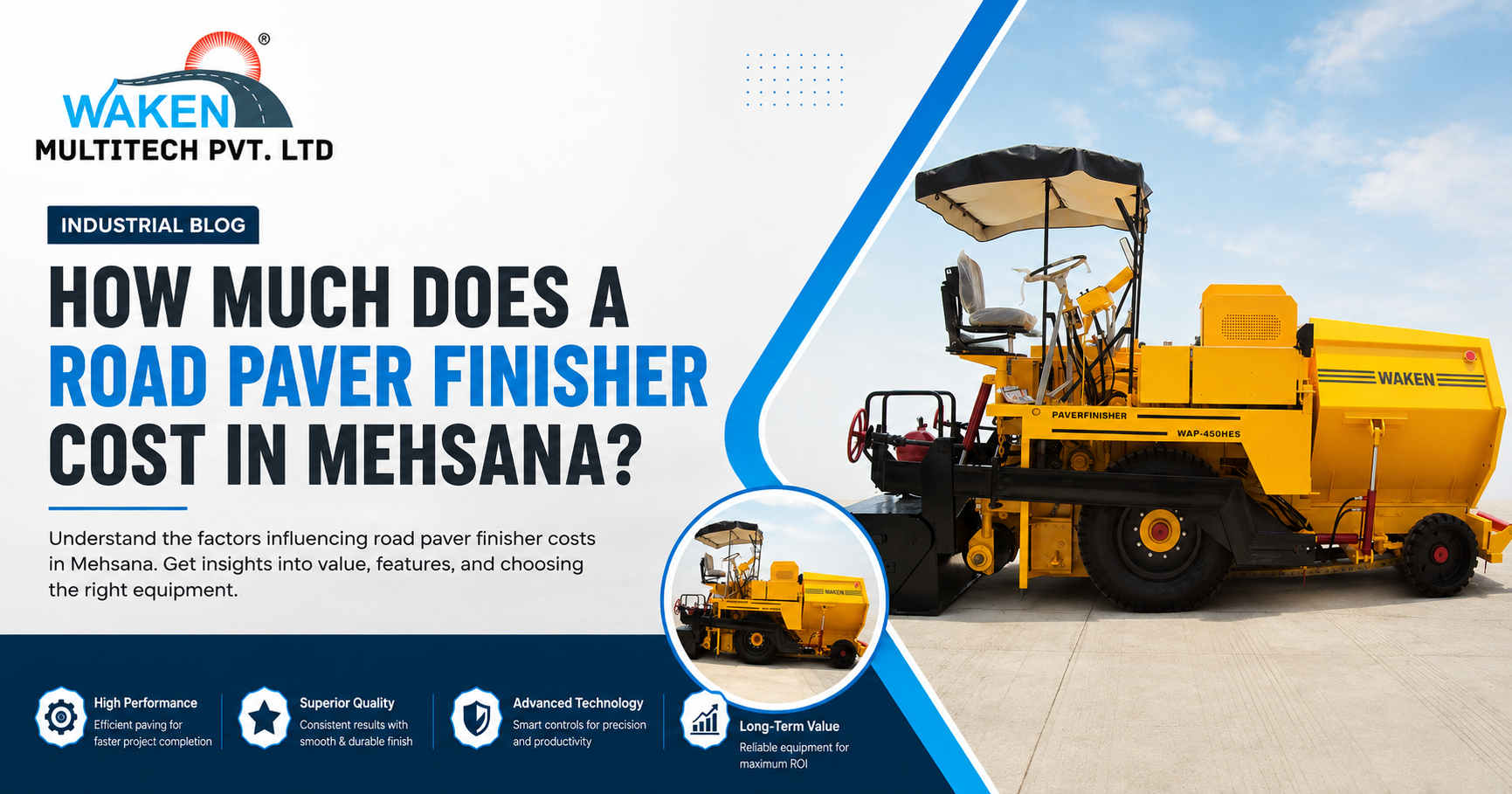
How Much Does a Road Paver Finisher Cost
Understand the factors influencing road paver finisher costs in Mehsana. Get insights into value, features, and choosing the right equipment from Waken Multitec
Why This Matters in Mehsana
Mehsana and its surrounding districts are experiencing consistent growth in infrastructure development, necessitating reliable and efficient road construction machinery. The demand for new roads, upgrades to existing networks, and commercial development projects directly impacts the need for high-performance paver finishers. Understanding equipment costs here is vital for contractors and government bodies to budget effectively and ensure project timelines are met with quality outcomes.
What is a Road Paver Finisher — Overview
A road paver finisher is a specialized piece of construction equipment designed to lay asphalt or other paving materials evenly and smoothly over a prepared road base. It works by receiving hot mix asphalt from a dump truck, distributing it through an auger system, and then compacting and leveling it with a heated screed. This process ensures a consistent thickness and surface finish, which are critical for road durability and driver comfort.
Key Features and Technical Specifications
The cost of a road paver finisher is directly tied to its capabilities and build quality. Key features that influence its price include:
- Paving Width: The range of widths the machine can cover in a single pass.
- Paving Thickness: The adjustable range for laying asphalt layers.
- Engine Power: The horsepower and type of engine, impacting performance on inclines and with heavy loads.
- Drive System: Whether it's mechanical, hydrostatic, or a combination, affecting maneuverability and precision.
- Screed Technology: Basic, vibrating, heated, or sensor-controlled screeds significantly impact finish quality and cost.
- Hopper Capacity: The volume of asphalt the machine can hold, affecting operational efficiency.
- Track/Wheel System: The configuration for mobility and stability on various job sites.
- Control System: Manual, semi-automatic, or fully automatic controls, including advanced sensor integration for grade and slope.
Industrial Applications and Use Cases
Road paver finishers are indispensable across a wide spectrum of construction projects:
- Highway Construction and Widening: Laying large volumes of asphalt for national and state highways.
- Urban Road Development: Paving city streets, bypasses, and arterial roads.
- Airport Runways and Taxiways: Requiring extremely precise and smooth surfaces.
- Industrial Estate Roads: Constructing durable access roads within manufacturing and logistics hubs.
- Residential Colony Roads: Paving internal roads in housing projects.
- Rural Road Improvement: Upgrading and resurfacing rural connectivity routes.
- Parking Lot Construction: Creating smooth and level surfaces for commercial and public parking areas.
- Repair and Resurfacing Projects: Applying new asphalt layers over existing road surfaces.
How to Choose the Right Road Paver Finisher
Selecting the appropriate road paver finisher involves considering several critical factors to ensure it meets your project needs and budget:
- Project Scale and Scope: Assess the typical size and type of roads you will be paving. Larger projects may require wider machines with higher output.
- Material Type: Determine if you primarily work with standard asphalt, stone mastic asphalt (SMA), or wet mix applications.
- Precision Requirements: For high-specification projects like airports or high-speed highways, advanced sensor technology is essential.
- Site Conditions: Consider the terrain, inclines, and accessibility of your typical work sites.
- Operator Skill Level: Simpler machines are easier to operate, while advanced models may require more skilled personnel.
- After-Sales Support: Investigate the availability of spare parts, maintenance services, and technical assistance from the manufacturer.
- Manufacturer Reputation and Experience: Choose a manufacturer with a proven track record in producing durable and reliable equipment.
- Budget vs. Total Cost of Ownership: Look beyond the initial purchase price to consider fuel efficiency, maintenance costs, and expected lifespan.
Quality Standards and Compliance
For any road construction equipment, adherence to quality standards is non-negotiable. In India, manufacturers often comply with standards set by the Bureau of Indian Standards (BIS) or international bodies like ISO. Equipment should be built to withstand demanding operational conditions, ensuring durability and safety. Buyers should inquire about the materials used, manufacturing processes, and any relevant certifications that attest to the machine's quality and compliance with industry norms.
Why Waken Multitech's Experience and Capability Matters
Waken Multitech Pvt. Ltd. brings over 15 years of dedicated experience in manufacturing road construction equipment, drawing on expertise honed within the industry. Our facility on the Mehsana–Vijapur Highway is equipped to produce high-performance road paver finishers that prioritize durability, precision, and efficiency. We focus on robust engineering and utilize advanced manufacturing techniques to ensure each machine meets rigorous quality control standards.
Our commitment extends to providing customized solutions tailored to specific project requirements and offering reliable after-sales support. This holistic approach ensures that our clients in Mehsana and beyond receive not just equipment, but a dependable partner for their road construction endeavors. We understand the local infrastructure demands and strive to deliver solutions that contribute to building stronger, more resilient roads.
Installation, Maintenance, and Care Tips
Proper installation, regular maintenance, and careful operation are key to maximizing the lifespan and performance of your road paver finisher.
- Installation: Ensure the machine is set up on a level surface and all initial checks are performed by trained technicians. Familiarize operators with the control panel and safety features.
- Daily Checks: Before each use, inspect fluid levels (hydraulic oil, engine oil, coolant), check tire pressure or track tension, and ensure all safety guards are in place.
- Lubrication: Follow the manufacturer's lubrication schedule diligently for all moving parts, especially the augers, conveyor chains, and screed components.
- Cleaning: Thoroughly clean the machine after each use, paying special attention to the hopper, auger channels, and screed. Residual asphalt can harden and cause operational issues.
- Screed Care: Keep the screed clean and ensure its heating system functions correctly. Avoid abrasive cleaning methods that can damage the surface.
- Regular Servicing: Adhere to the recommended service intervals for engine maintenance, hydraulic system checks, and component wear inspections.
- Storage: When not in use for extended periods, store the paver finisher in a dry, protected area to prevent rust and component degradation.
Frequently Asked Questions
The cost is primarily determined by the machine's paving width, screed technology (basic vs. sensor-controlled), engine power, drive system (mechanical vs. hydrostatic), hopper capacity, and overall build quality. Advanced features like hydrostatic drives and sophisticated sensor systems for precise grade and slope control will naturally increase the initial investment.
Yes, generally, paver finishers equipped with advanced sensor systems for automatic grade and slope control are more expensive than purely mechanical models. These sensors allow for greater precision and a smoother finish, which is critical for high-specification projects, thus commanding a higher price point.
Larger, more powerful engines, often diesel-powered, are typically found in higher-capacity paver finishers and will contribute to a higher cost. The engine's brand and its compliance with emission standards can also influence the price. More power is needed for larger machines or those operating on challenging terrains.
With proper maintenance, regular servicing, and careful operation, a well-built road paver finisher can have a lifespan of 10 to 15 years or even longer. The total operating hours and the intensity of use will also play a significant role in its longevity.
While the core paving mechanism is similar, machines specifically designed for wet mix applications might have different auger configurations, conveyor systems, or screed designs compared to standard asphalt pavers. These specialized features can influence the cost, though many versatile paver finishers can handle both with appropriate adjustments or attachments.
New road paver finishers typically come with a manufacturer's warranty that covers defects in materials and workmanship. The duration and coverage vary by manufacturer, but common periods range from six months to two years, often with specific limitations on hours of operation or types of components covered.
Conclusion
The investment in a road paver finisher is a significant decision for any construction business in Mehsana. While understanding the initial cost is important, evaluating the machine's features, its suitability for your specific applications, and the long-term value it provides is paramount. Factors like paving width, screed technology, engine power, and the manufacturer's reputation all play a role. By carefully considering these elements and prioritizing quality and support, you can select a road paver finisher that ensures efficient, high-quality road construction for years to come.
Get In Touch
Waken Multitech Pvt. Ltd.