
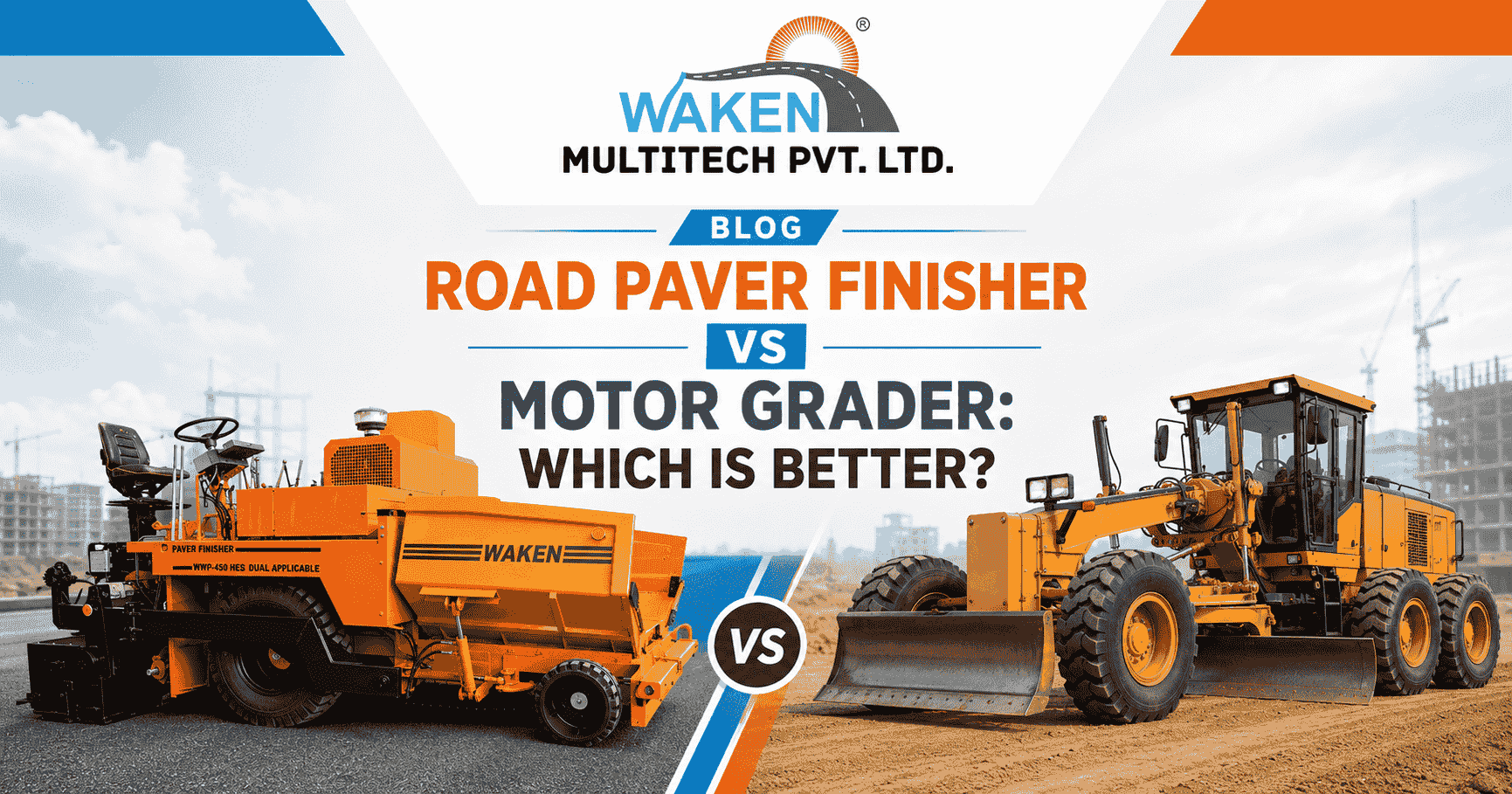
Road Paver Finisher vs Motor Grader: Which is Better?
In the realm of road construction, the selection of appropriate machinery plays a pivotal role in project success, efficiency, and the quality of the final output. Among the essential equipment are road paver finishers and motor graders, each designed for distinct functions. Understanding their capabilities and limitations is key to making an informed decision. This guide aims to clarify the differences between a road paver finisher and a motor grader, helping you determine which is better suited for your specific road construction needs.
Understanding Road Paver Finishers
A road paver finisher, often referred to as an asphalt paver or road paving machine, is the specialized equipment responsible for laying asphalt concrete or other paving materials onto a surface. Its primary function is to spread and level the material, performing a degree of initial compaction before heavier rollers take over. The process typically involves receiving asphalt from a dump truck into its hopper, conveying it to the rear, and then using a screed to distribute and smooth the material to the desired width and thickness.
Waken Multitech Pvt. Ltd. offers a range of paver finishers designed for durability and performance. These include Hydrostatic Sensor Paver Finishers, Mechanical Wet Mix Paver Finishers, and various models like the 95 HP and 105 HP Road Paver Finishers. These machines are engineered to achieve specific paving widths and thicknesses, ensuring a consistent and smooth surface finish critical for modern road infrastructure.
Applications of Paver Finishers
- Laying asphalt concrete for roads, highways, bridges, and parking lots.
- Ensuring a uniform layer of asphalt with precise width and thickness.
- Performing initial compaction and smoothing of the paving material.
- Creating high-quality surfaces required for smooth traffic flow.
Understanding Motor Graders
Motor graders, also known as road graders or maintainers, are heavy-duty machines distinguished by a long horizontal blade mounted between the front and rear axles. Their core function is to flatten, level, and shape surfaces with high precision. While they can be used for bulk earthmoving, they particularly excel in the finishing stages of road construction, creating stable subgrades and ensuring that the roadbed meets strict engineering standards and desired slopes.
Motor graders are invaluable for tasks requiring meticulous surface preparation. Their ability to precisely control the depth of cut and the angle of the blade allows for the creation of smooth, uniform surfaces essential for the structural integrity of a road. Beyond road construction, they are also utilized for tasks such as snow removal and maintaining unpaved roads.
Applications of Motor Graders
- Precision leveling and grading of subgrades and base layers.
- Creating precise slopes and contours for drainage and road geometry.
- Finishing highways and large paved areas to exact specifications.
- Maintaining unpaved roads and surfaces.
- Snow removal in large areas.
Key Differences and Selection Guidance
The fundamental difference lies in their primary roles: paver finishers are for laying and smoothing paving materials, while motor graders are for shaping and leveling the ground beneath or around the paving process. A paver finisher applies the final asphalt layer, whereas a motor grader prepares the foundation for that layer or works on different types of road surfaces.
Choosing between them depends entirely on the task at hand:
- For laying asphalt: A road paver finisher is indispensable. It’s the machine that directly places the asphalt for the road surface.
- For preparing the base: A motor grader is crucial for ensuring the ground is perfectly level, smooth, and at the correct gradient before the paver arrives.
- For surface finishing on non-asphalt roads: Motor graders are ideal for shaping gravel roads or preparing large, flat areas.
While motor graders offer precision, they are known for high fuel consumption, specialized operator requirements, and significant maintenance needs, contributing to higher ownership costs. Tractor graders can offer a more economical alternative for routine work, though they may lack the power and speed of true motor graders.
| Feature | Road Paver Finisher | Motor Grader |
|---|---|---|
| Primary Function | Laying and smoothing paving materials (e.g., asphalt) | Leveling, grading, and shaping surfaces |
| Role in Road Construction | Applies the surface layer | Prepares the base and subgrade, or maintains unpaved surfaces |
| Key Component | Screed for spreading and leveling | Long, adjustable horizontal blade |
| Precision Level | Ensures uniform paving width and thickness | High precision in surface leveling and slope creation |
| Material Handled | Asphalt concrete, other paving mixes | Soil, gravel, aggregate, snow |
| Typical Stage | Final paving layer application | Subgrade preparation, base course finishing, maintenance |
Which is Better? The Verdict
The question of which is